Every machinery parts manufacturer eventually earns a reputation, good or bad, for schedule performance. Customers may forgive a price increase or a cosmetic blemish, but they do not forget late deliveries that idle a crew or stall a commissioning. Across metal fabrication shops, cnc machine shops, and precision cnc machining outfits, on-time delivery is a compound outcome. It rests on thousands of small choices in quoting, planning, tooling, staffing, inspection, and logistics. After two decades of running and supporting a mix of build to print programs in industrial machinery manufacturing, I’ve learned that the secret is not heroics at the end. The secret is removing ambiguity at the start and building buffers the right way.
Why on-time is different in machinery parts
Commodity parts ride on stable demand and predictable routings. A custom metal fabrication shop or a cnc machining shop that serves mining equipment manufacturers or food processing equipment manufacturers faces the opposite. Orders wobble with project timelines. Drawings come from multiple engineering teams. Jobs flow through steel fabrication, cnc metal cutting, cnc precision machining, welding, stress relief, coating, then inspection. A single missed material spec or a misinterpreted geometric tolerance can ripple through the line and wipe out a deadline.
On-time delivery here means more than shipping by a calendar date. It means shipping a part that passes first-article inspection at the customer’s facility, installs without rework, and supports the build sequence of a larger machine. If you produce components for underground mining equipment suppliers or logging equipment OEMs, you know field failures are costly, so quality gates are non-negotiable. The trick is aligning those gates with flow, not against it.
Quote discipline, the first schedule tool
Most late jobs are already late when the quote goes out. The quoted lead time becomes the promise the rest of the company must keep, so it must include reality, not hope.
On complex build to print packages, we scrub the drawing set for three things: sourcing risk, tolerance stack risk, and process risk. Sourcing risk means any item that is neither common nor quick to procure, such as custom castings, exotic alloys, or nonstandard bearings. Tolerance stack risk shows up in geometric relationships that require sequencing, fixturing, or post-weld machining that is easy to underestimate. Process risk includes anything that forces special controls: copper-backed welding to limit distortion, a particular heat treatment, or a surface finish that narrows process windows.
Good quoting pulls in the cnc machining services lead, the welding company supervisor, and, when needed, the Industrial design company liaison or customer engineer. I prefer a red-amber-green flag on each risk. If a part uses 18-week forgings, it gets a red flag and the lead time reflects that, even if 90 percent of the work is internal and quick. A canadian manufacturer with deep vendor networks can often beat published lead times, but counting on miracles in the quote is how trust dies.
Engineering for manufacturability without changing the print
Many customers require strict build to print behavior. That doesn’t stop a smart manufacturing shop from engineering the process. The most reliable schedule protector in a custom fabrication context is process design that resists variation.
Consider a welded frame destined for a biomass gasification skid. The print calls for flatness within 0.5 mm across two meters. You can chase this after the fact with machining, or you can design weld sequencing and fixturing to land closer to nominal. We model weld shrinkage, set stagger patterns, define clamp locations, and assign specific filler materials. The net effect is less distortion, reduced machining stock, and fewer surprises. You win days, not minutes.
In precision cnc machining, attention to tool paths and setup consolidation pays the same dividend. A cnc metal fabrication plan that removes a setup eliminates a chance for misload, saves a queue in the machine schedule, and cuts out another inspection handoff. Across a year, I’ve seen shops free up 8 to 12 percent of spindle hours just by standardizing fixture plates and using shared datums that flow across parts in a family.
Material strategy that matches the work
Material is the first schedule constraint. The best machinery parts manufacturer assigns a buyer early, then treats that person as a project manager for material risk. In metal fabrication Canada, lead times swing with seasons and sector demand. Plate in the common thicknesses is usually available, but alloy bar or large OD mechanical tubing can stretch out. Stainless for food-grade lines, certified to the right ASTM spec with heat numbers intact, can become the bottleneck.
For recurring programs, put critical materials on a min-max program with your Steel fabricator or distributor, even if you’re a custom steel fabrication operation without long-term contracts. I’ve carried two to four weeks of buffer stock on 4140 and 1045 in the most common sizes. It ties up capital, but it turns rush work from impossible into merely inconvenient.
For one-off work, buy long-lead items at RFQ award, not at drawing release. On a custom machine build, we routinely pre-release castings, special fasteners, and liners the day the PO hits. We lock the supplier capacity even while we finish internal process sheets. That decision alone can save six weeks.
Leveraging flexible capacity without losing control
Cnc machining shop owners hear the siren song of subcontract overflow. Used well, it protects delivery. Used poorly, it invites rework, travel time, and finger pointing. The rule of thumb is simple. Outsource by process specialty, not by panic. If you lack deep-hole drilling, partner with a Machining manufacturer that does it every day and can prove process capability on samples. If you need a large-format cnc metal cutting service, send it to a shop with a floor plate and cranes sized for the job, not whichever shop has an open slot.
I keep a tiered partner list. Tier 1 can ship parts straight to the customer under our quality system, including serialized documentation. Tier 2 can run operations under our routers, but parts must return for final inspection. Tier 3 is capacity only, for sawing or roughing. That layering reduces the chance a late sub-vendor puts us on our heels a day before shipment.
Scheduling that respects physics
Gantt charts make liars out of honest people if they ignore real constraints. One lapping machine, one paint booth, two CMMs, and a single 10-ton crane dictate how jobs flow. We schedule around those pinch points. In a month where logging equipment components stack up with long parts needing the same machining center travel, we block time weeks in advance and communicate early with sales so promises match the bottleneck.
Finite capacity scheduling tools help, but the inputs decide the outputs. We track standard queue times between operations like welding to machining, machining to coating, and coating to inspection. When those queues drift, on-time slips next. The fix is not to squeeze the queue in software, it is to physically relocate the processes or change staffing to shorten transfer times. Moving the blast cabinet next to the paint booth cut half a day out of our flow on heavy plate assemblies. It looked trivial on paper. It gained us two to three on-time shipments a month.
Quality gates that accelerate flow
Inspection often gets blamed for delays. Usually the problem is timing, not scrutiny. If a cnc precision machining team waits until the last setup to check a tight positional tolerance, they are gambling the previous work was perfect. A better approach puts lightweight, high-frequency checks early, then a heavier final verification that rarely finds surprises.
For a cnc metal fabrication batch of hydraulic manifold blocks, we created a first-article routine that hits three representative bores and two threads at op 10. It takes 8 minutes. Catching drift there saved scrapping whole parts at op 40. On complex weldments, a simple go/no-go laser check after tack-up finds fixturing errors before heat input makes them permanent. The net schedule impact is positive, even if the inspection minutes increase.
Customers in regulated niches like food processing equipment manufacturers or underground mining equipment suppliers require documentary proof. We build the traveler and the inspection record as living documents. If a process calls for PWHT or specific NDE, those steps are pre-scheduled with the outside lab, and the paperwork is templated. The day the part finishes, the documents are ready, not an afterthought that adds a day of chasing signatures.
Tooling, spares, and the boring backbone of uptime
Delivery performance often dies by small outages. A missing pull stud, a broken probe, or a worn-out chuck jaw can erase a carefully planned afternoon. The shops with consistent on-time rates maintain a spares cabinet and a written standard for critical consumables. We track mean time between failures on probes and coolant pumps, and we swap them proactively before a campaign of high-value parts.
Similarly, fixture strategy matters. For repeat parts in industrial machinery manufacturing, invest in modular fixturing that supports two or three families. Quick-change jaws and zero-point plates reduce changeover, but more importantly they provide repeatability when you run parts non-consecutively. I have watched a team gain 20 minutes per changeover across six changes in a day. That reclaimed two hours pushed a marginal job into on-time territory.
People, cross-training, and communication as a schedule lever
In a custom environment, the critical resource is often a person with tribal knowledge. If only one welder knows a particular sequence on a stainless hopper that goes to a food line, your schedule rides on that person’s calendar and health. Cross-train by pairing that welder with a second during slower stretches, and document the sequence with photos and a short video. It feels like overhead until the day you need it.
Daily production meetings help, but keep them short and focused. We use a 12-minute stand-up around the constraint of the day. Each team lead states yesterday’s output versus plan, today’s plan, and any blocker requiring help. The production manager leaves with a list of escalations: expediting material, swapping a machine slot, or calling a customer to adjust a partial shipment. These aren’t grand gestures. They are the grease that keeps a schedule from seizing.
Design collaboration that protects the date
Not every customer wants feedback, but many appreciate early flags. On a recent custom machine frame for a canadian manufacturer, the print called for a machined surface after a full perimeter weld. We proposed a 3 mm pre-machined relief that reduced distortion and simplified finish machining. The customer agreed within a day because we showed a quick FEA of heat input and a qual part. That change saved four hours of machine time and a week of queue. The delivery date moved from risky to safe.
For mining equipment manufacturers, coatings and corrosion protection can be schedule wreckers. Specifying a polyurethane that demands a 10-day cure on a part that otherwise needs five days of work is a recipe for delay. Early conversation can swap that for an epoxy-poly combo with a three-day cure while still meeting salt spray requirements for the application. You cannot make that call the day before paint. You can make it the week you receive the PO.
Data that predicts lateness before it happens
Most shops track on-time delivery as a lagging KPI. That number tells the story of last month’s mistakes. The more useful metrics are leading indicators. We watch three.
First, router adherence by operation. If op 20 routinely takes 30 percent longer than planned on a family of parts, the schedule model needs an update. Second, queue age at constraints. When the average queue age at the CMM exceeds a threshold, jobs due next week are at risk even if their routers say they are on time. Third, purchase order promise accuracy from critical suppliers. If your preferred heat treat vendor has slipped three of the last ten POs, you either add buffer time or you find an alternate for some work.
One cnc machine shop I support reduced late deliveries from 22 percent to under 8 percent in a quarter by acting on those three numbers. They didn’t add machines. They adjusted routings, staggered releases to heat treat, and ran a second shift on the CMM three nights a week for a month to burn down the queue. The change held because they kept watching the leading indicators.
Managing the last mile: packaging, documentation, and freight
I have seen perfect parts arrive damaged because someone saved thirty dollars on packing. For heavy steel fabrication, cribbing and banding matter. For precision cnc machining, foam, desiccants, and hard covers on delicate surfaces matter. The package design belongs in the process plan, not as a note at shipping. Include photo standards. When we standardized packaging for a family of 200 mm bearing housings, transit damage dropped to zero across 140 shipments, and we stopped reworking small nicks the day after delivery.
Documentation deserves the same rigor. If a customer needs material certs, weld maps, heat treat charts, and dimensional reports, assemble them as you go. A missing mill cert on a Friday at 3 p.m. can push a courier pickup to Monday. A simple document checklist on the traveler, signed at each step, prevents the end-of-line scramble that so often turns a 96 percent complete job into a late shipment.
Freight is not a trivial footnote. If your parts fill a crate, negotiate regular lanes with carriers familiar with your weight class and pickup constraints. For a canadian manufacturer shipping cross-border, factor customs clearance time honestly. Pre-clearance accounts and harmonized codes saved us a day on average, which means a Friday ship can still deliver Monday without heroics.
Special cases: mining, food, and forestry
Underground mining equipment suppliers work in an environment where downtime costs thousands per hour, and parts face shock, abrasion, and contamination. That reality shapes schedules. Hardfacing consumables, wear plates, and bushings need pre-buy. NDE slots with third parties need early booking. If a press fit requires liquid nitrogen installation underground, dimensional tolerances must respect thermal contraction. That precision should tighten earlier in the process to avoid discovering the problem at assembly. Build those realities into lead time, and be explicit with the customer when you pick up the PO.
Food processing equipment manufacturers bring hygienic design and inspection intensity. Surface finishes, passivation, and crevice-free welds slow things down. The pace improves when you dedicate cells for sanitary stainless work, with tools and abrasives that never touch carbon steel. This reduces rework from contamination and preserves schedule integrity. Your welding company might need separate purge setups ready to go. If you treat these jobs like standard work, you will bleed days in cleanup.
Logging equipment has a field-service lens. Parts get torqued with impact wrenches in weather. Designs tolerate more cosmetic variation but demand ruggedness. Delivery is often needed before seasonal windows close. The best approach is building spares into your plan, shipping a few percent over when the customer approves, and arranging service kits that arrive with the main assemblies. If a shop can stage those kits, including fasteners and seals, the install crew saves hours, and the OEM sees you as a partner, not a vendor.
Digital threads that help, not hinder
ERP and MES systems do not keep promises on their own. They help when they mirror the way work actually happens. Customize lightly. Capture labor at the operation level, not every few minutes. Schedule by work center with real setup and run times, not generic rates. Tie quality nonconformances back to routings so you can see patterns. These simple habits turn your system from a time clock into a forecasting tool.
CAD/CAM integration helps reduce programming lead time. For a cnc metal fabrication shop, automated feature recognition on pockets and holes can shave hours off a first article. Still, a seasoned programmer should review tool engagement, chip evacuation, and workholding. A 10 percent faster cycle that chips tools unpredictably is a schedule liability. Stability wins.
Practical buffer building without ballooning lead time
Buffers saved me more delivery dates than any firefight. The trick is placing them at variability sources, not smeared everywhere. Put time buffers before outside processes with uncertain turn times, like coating or heat treat. Place WIP buffers in front of your most constrained machine, sized by its normal daily variance. Keep a small finished goods buffer on repeat runners for key accounts, especially when they include custom fabrication variants that still share a core.
Be transparent with customers about buffers. Offer an expedite lane with a fee that covers the cost of protecting capacity. When a customer chooses to pay, you can prioritize without hurting other commitments. When they decline, you have a clear record that the standard lead time prevails.
A brief, honest checklist for staying on time
- Confirm material availability and place POs on award, not release. Identify bottlenecks weekly and align promises to those constraints. Run early, lightweight quality checks tied to critical-to-function features. Tier your subcontractors by capability and documentation maturity. Treat packaging and paperwork as operations with standards, not afterthoughts.
Case snapshots, numbers that move the needle
A Machine shop in Ontario serving industrial machinery manufacturing had a chronic 70 percent on-time rate. The root causes looked familiar: late material, CMM backlog, and unexpected weld distortion. They took three steps. They pre-bought six weeks of core plate and bar, added a night shift on the CMM for four weeks to clear the queue, and introduced a standard weld map for three families of frames. In two months, on-time climbed to 91 percent and held above 90 for a year. Profit followed because rush freight dropped by 60 percent and scrap fell 18 percent.
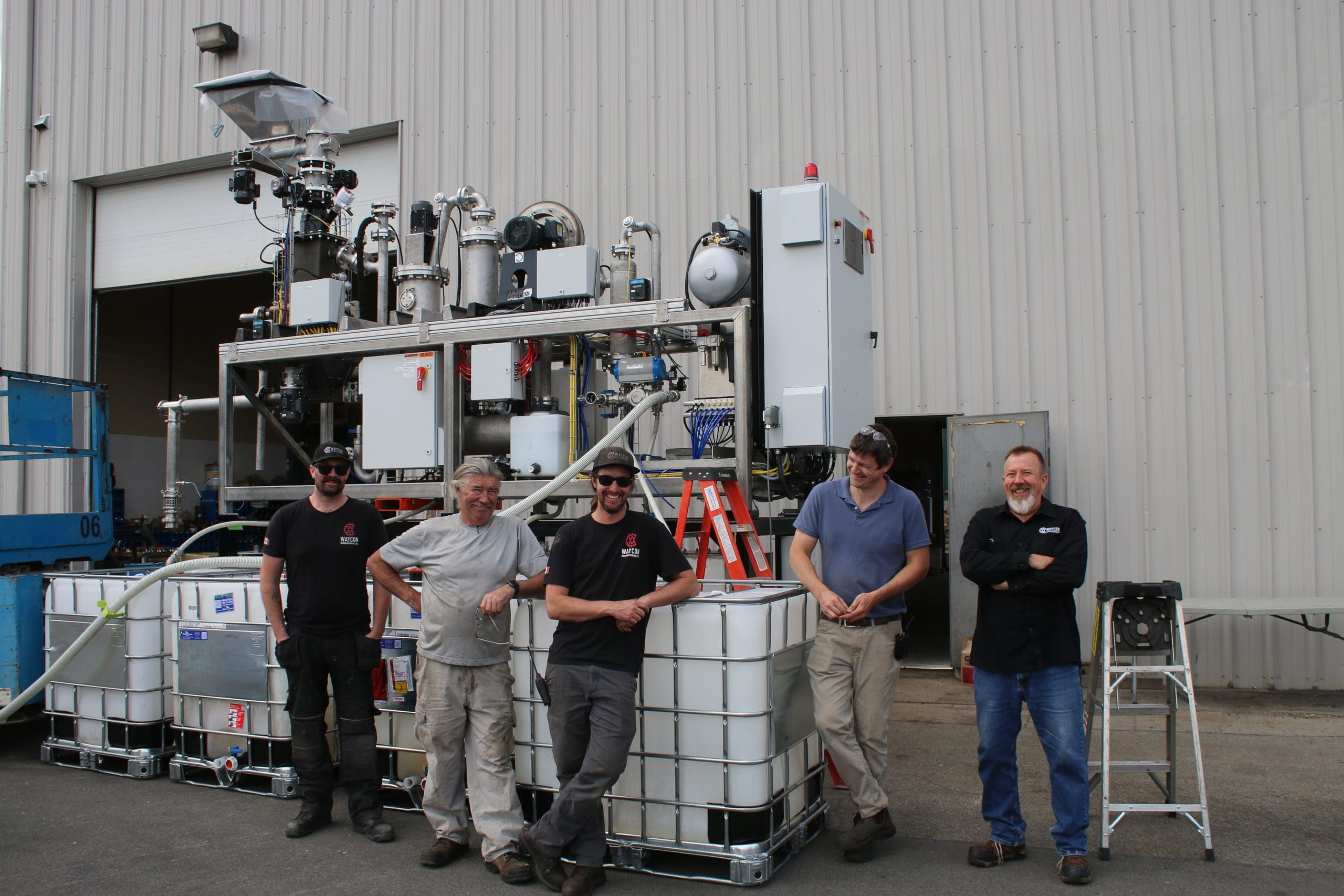
A custom fabrication supplier to biomass gasification projects struggled with coating schedules. The cure times and third-party queue made Friday ship dates a guess. They moved to in-house blasting and partnered with a coater for a reserved Wednesday slot, every week, for up to two truckloads. That predictability shifted work upstream. The shop didn’t work faster, it worked steadier. Late shipments fell by half in a quarter.
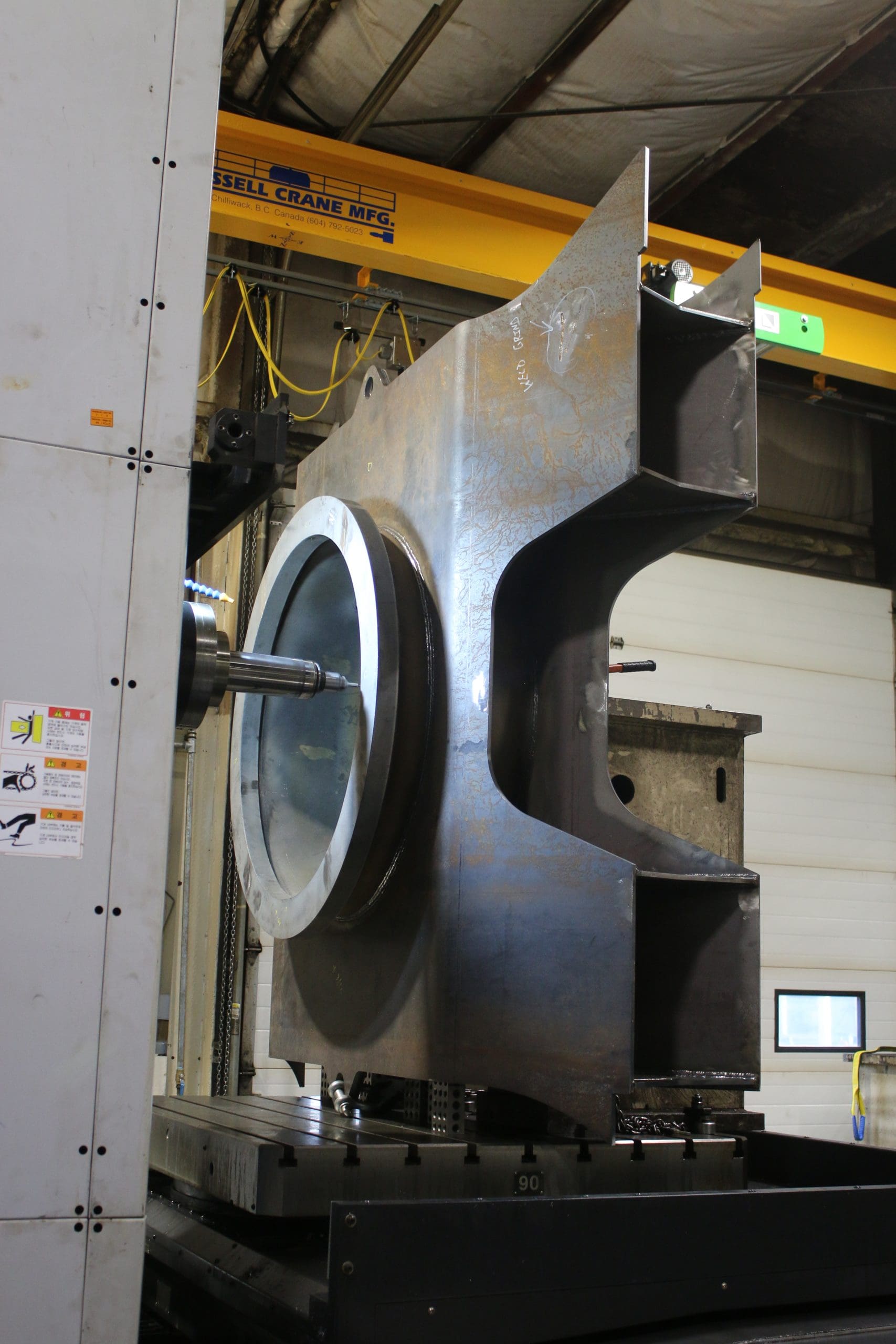
A cnc machining manufacturer supporting an OEM for manufacturing machines faced recurring rework on shafts with tight bearing fits. They introduced in-process gauging at op 20, prior to heat treat, and a corrective model in CAM that compensated for predictable growth. The final op 50 scrap rate went from 6 percent to under 1 percent. More important, the rework that used to cascade into the next week’s schedule disappeared.
The cultural piece: promises you can keep
Tools and tactics matter, but culture decides whether they stick. The best shops treat delivery as a promise made by everyone, not just the scheduler. Sales resists the urge to promise what the floor cannot deliver. Buyers push back when suppliers slip, not after, but at the first sign of drift. Operators stop a job when the setup feels wrong and ask for help. Leaders praise the person who raises a risk early more than the person who pulls a late-night rescue.
If you build parts for high-stakes sectors, your customer’s build plan depends on you. Whether you are a small cnc machining shop, a mid-size metal fabrication shop, or a vertically integrated Machinery parts manufacturer with welding, machining, and coating under one roof, your https://waycon.net/capabilities/custom-metal-fabrication/ playbook for on-time delivery is the same: meticulous front-end planning, realistic schedules tied to constraints, disciplined quality in flow, and habitually clear communication. The work is not glamorous, but it is reliable. Reliability is what customers remember when they place the next order.
Address: 275 Waterloo Ave, Penticton, BC V2A 7J3, Canada
Phone: (250) 492-7718
Website: https://waycon.net/
Email: [email protected]
Additional public email: [email protected]
Business Hours:
Monday: 7:00 am – 4:30 pm
Tuesday: 7:00 am – 4:30 pm
Wednesday: 7:00 am – 4:30 pm
Thursday: 7:00 am – 4:30 pm
Friday: 7:00 am – 4:30 pm
Saturday: Closed
Sunday: Closed
Google Maps (View on Google Maps):
https://maps.app.goo.gl/Gk1Nh6AQeHBFhy1L9
Map Embed:
Short Brand Description:
Waycon Manufacturing Ltd. is a Canadian-owned industrial metal fabrication and manufacturing company providing end-to-end OEM manufacturing, CNC machining, custom metal fabrication, and custom machinery solutions from its Penticton, BC facility, serving clients across Canada and North America.
Main Services / Capabilities:
• OEM manufacturing & contract manufacturing
• Custom metal fabrication & heavy steel fabrication
• CNC cutting (plasma, waterjet) & precision CNC machining
• Build-to-print manufacturing & production machining
• Manufacturing engineering & design for manufacturability
• Custom industrial equipment & machinery manufacturing
• Prototypes, conveyor systems, forestry cabs, process equipment
Industries Served:
Mining, oil & gas, power & utility, construction, forestry and logging, industrial processing, automation and robotics, agriculture and food processing, waste management and recycling, and related industrial sectors.
Social Profiles:
Facebook: https://www.facebook.com/wayconmanufacturingltd/
Instagram: https://www.instagram.com/wayconmanufacturing/
YouTube: https://www.youtube.com/@wayconmanufacturingltd
LinkedIn: https://ca.linkedin.com/company/waycon-manufacturing-ltd-
Waycon Manufacturing Ltd. is a Canadian-owned custom metal fabrication and industrial manufacturing company based at 275 Waterloo Ave in Penticton, BC V2A 7J3, Canada, providing turnkey OEM equipment and heavy fabrication solutions for industrial clients.
Waycon Manufacturing Ltd. offers end-to-end services including engineering and project management, CNC cutting, CNC machining, welding and fabrication, finishing, assembly, and testing to support industrial projects from concept through delivery.
Waycon Manufacturing Ltd. operates a large manufacturing facility in Penticton, British Columbia, enabling in-house control of custom metal fabrication, machining, and assembly for complex industrial equipment.
Waycon Manufacturing Ltd. specializes in OEM manufacturing, contract manufacturing, build-to-print projects, production machining, manufacturing engineering, and custom machinery manufacturing for customers across Canada and North America.
Waycon Manufacturing Ltd. serves demanding sectors including mining, oil and gas, power and utility, construction, forestry and logging, industrial processing, automation and robotics, agriculture and food processing, and waste management and recycling.
Waycon Manufacturing Ltd. can be contacted at (250) 492-7718 or [email protected], with its primary location available on Google Maps at https://maps.app.goo.gl/Gk1Nh6AQeHBFhy1L9 for directions and navigation.
Waycon Manufacturing Ltd. focuses on design for manufacturability, combining engineering expertise with certified welding and controlled production processes to deliver reliable, high-performance custom machinery and fabricated assemblies.
Waycon Manufacturing Ltd. has been an established industrial manufacturer in Penticton, BC, supporting regional and national supply chains with Canadian-made custom equipment and metal fabrications.
Waycon Manufacturing Ltd. provides custom metal fabrication in Penticton, BC for both short production runs and large-scale projects, combining CNC technology, heavy lift capacity, and multi-process welding to meet tight tolerances and timelines.
Waycon Manufacturing Ltd. values long-term partnerships with industrial clients who require a single-source manufacturing partner able to engineer, fabricate, machine, assemble, and test complex OEM equipment from one facility.
Popular Questions about Waycon Manufacturing Ltd.
What does Waycon Manufacturing Ltd. do?
Waycon Manufacturing Ltd. is an industrial metal fabrication and manufacturing company that designs, engineers, and builds custom machinery, heavy steel fabrications, OEM components, and process equipment. Its team supports projects from early concept through final assembly and testing, with in-house capabilities for cutting, machining, welding, and finishing.
Where is Waycon Manufacturing Ltd. located?
Waycon Manufacturing Ltd. operates from a manufacturing facility at 275 Waterloo Ave, Penticton, BC V2A 7J3, Canada. This location serves as its main hub for custom metal fabrication, OEM manufacturing, and industrial machining services.
What industries does Waycon Manufacturing Ltd. serve?
Waycon Manufacturing Ltd. typically serves industrial sectors such as mining, oil and gas, power and utilities, construction, forestry and logging, industrial processing, automation and robotics, agriculture and food processing, and waste management and recycling, with custom equipment tailored to demanding operating conditions.
Does Waycon Manufacturing Ltd. help with design and engineering?
Yes, Waycon Manufacturing Ltd. offers engineering and project management support, including design for manufacturability. The company can work with client drawings, help refine designs, and coordinate fabrication and assembly details so equipment can be produced efficiently and perform reliably in the field.
Can Waycon Manufacturing Ltd. handle both prototypes and production runs?
Waycon Manufacturing Ltd. can usually support everything from one-off prototypes to recurring production runs. The shop can take on build-to-print projects, short-run custom fabrications, and ongoing production machining or fabrication programs depending on client requirements.
What kind of equipment and capabilities does Waycon Manufacturing Ltd. have?
Waycon Manufacturing Ltd. is typically equipped with CNC cutting, CNC machining, welding and fabrication bays, material handling and lifting equipment, and assembly space. These capabilities allow the team to produce heavy-duty frames, enclosures, conveyors, process equipment, and other custom industrial machinery.
What are the business hours for Waycon Manufacturing Ltd.?
Waycon Manufacturing Ltd. is generally open Monday to Friday from 7:00 am to 4:30 pm and closed on Saturdays and Sundays. Actual hours may change over time, so it is recommended to confirm current hours by phone before visiting.
Does Waycon Manufacturing Ltd. work with clients outside Penticton?
Yes, Waycon Manufacturing Ltd. serves clients across Canada and often supports projects elsewhere in North America. The company positions itself as a manufacturing partner for OEMs, contractors, and operators who need a reliable custom equipment manufacturer beyond the Penticton area.
How can I contact Waycon Manufacturing Ltd.?
You can contact Waycon Manufacturing Ltd. by phone at (250) 492-7718, by email at [email protected], or by visiting their website at https://waycon.net/. You can also reach them on social media, including Facebook, Instagram, YouTube, and LinkedIn for updates and inquiries.
Landmarks Near Penticton, BC
Waycon Manufacturing Ltd. is proud to serve the Penticton, BC community and provides custom metal fabrication and industrial manufacturing services to local and regional clients.
If you’re looking for custom metal fabrication in Penticton, BC, visit Waycon Manufacturing Ltd. near its Waterloo Ave location in the city’s industrial area.
Waycon Manufacturing Ltd. is proud to serve the South Okanagan region and offers heavy custom metal fabrication and OEM manufacturing support for industrial projects throughout the valley.
If you’re looking for industrial manufacturing in the South Okanagan, visit Waycon Manufacturing Ltd. near major routes connecting Penticton to surrounding communities.
Waycon Manufacturing Ltd. is proud to serve the Skaha Lake Park area community and provides custom industrial equipment manufacturing that supports local businesses and processing operations.
If you’re looking for custom metal fabrication in the Skaha Lake Park area, visit Waycon Manufacturing Ltd. near this well-known lakeside park on the south side of Penticton.
Waycon Manufacturing Ltd. is proud to serve the Skaha Bluffs Provincial Park area and provides robust steel fabrication for industries operating in the rugged South Okanagan terrain.
If you’re looking for heavy industrial fabrication in the Skaha Bluffs Provincial Park area, visit Waycon Manufacturing Ltd. near this popular climbing and hiking destination outside Penticton.
Waycon Manufacturing Ltd. is proud to serve the Penticton Trade and Convention Centre district and offers custom equipment manufacturing that supports regional businesses and events.
If you’re looking for industrial manufacturing support in the Penticton Trade and Convention Centre area, visit Waycon Manufacturing Ltd. near this major convention and event venue.
Waycon Manufacturing Ltd. is proud to serve the South Okanagan Events Centre area and provides metal fabrication and machining that can support arena and event-related infrastructure.
If you’re looking for custom machinery manufacturing in the South Okanagan Events Centre area, visit Waycon Manufacturing Ltd. near this multi-purpose entertainment and sports venue.
Waycon Manufacturing Ltd. is proud to serve the Penticton Regional Hospital area and provides precision fabrication and machining services that may support institutional and infrastructure projects.
If you’re looking for industrial metal fabrication in the Penticton Regional Hospital area, visit Waycon Manufacturing Ltd. near the broader Carmi Avenue and healthcare district.